India’s AI boom looks different up close. Plus, our take on the AI benchmarking frenzy and a quick interview with Runable.
Read from your browser
Tech in Asia logo

The Prompt

Welcome to The Prompt, your Monday dive into the world of AI that puts Asia front and center. From Big Tech's power players to the region's scrappy disruptors, we cover it all. Subscribe to get full access to our AI reporting. Ensure our articles appear in your Google searches:

Google Preferred Source badge

Hello reader,

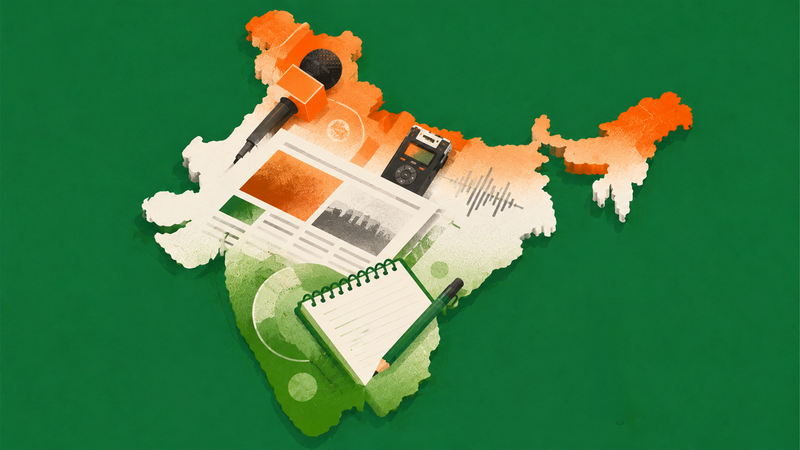
For anyone arriving in Bengaluru hoping to understand its AI scene, the sheer number of events can be dizzying.

OpenAI, Anthropic, Cursor, and Wispr Flow have opened, or are preparing to open, offices here. Launches, hackathons, and mixers seem to fill the calendar every other day.

The interest is easy to understand. Bengaluru is home to more than one million tech workers, including a vast pool of coders and enthusiastic AI users. As one AI lab executive told me, few places outside China combine India's enormous scale with such a dense concentration of technology talent in a single city.

Yet all this activity can obscure a more uncomfortable reality: Big Tech still largely sees India as a market to sell to rather than a place where the next generation of leading AI companies will be built.

While Indian VCs enthusiastically talk up the country's AI opportunity online, they often sound far less convinced in private. "All the action is happening in the US," one investor told me. Some Indian funds have even opened Bay Area offices.

Startups face the same contradiction. Many present themselves as US-headquartered even when their engineering and operations teams are nearly all in Bengaluru.

The reason is not merely access to customers. "Being seen as an Indian-headquartered company does not help with optics when it comes to fundraising," said one consumer-tech founder who pivoted into AI.

Our job at Tech in Asia is to look past the crowded event calendars and sweeping claims to separate activity from progress and optics from substance. That is the reporting your subscriptions make possible.

Two months into the job, I'm still excited every day to be covering the fastest-moving beat in technology. If you have a story tip, email me at pranav.balakhrisnan@techinasia.com.

Pranav Balakrishnan, AI reporter


TOP AI READ FROM OUR DESK

Life's a game, and AI agents are Animoca's new play

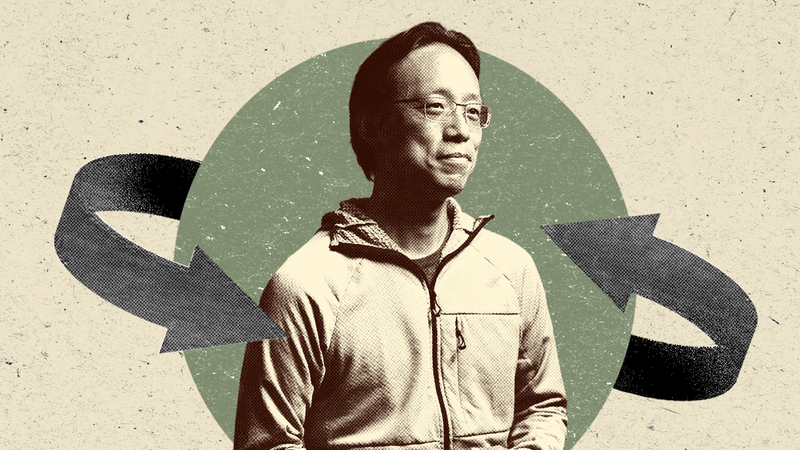
Hong Kong-based Animoca Brands, best known for Web3 and gaming, has entered the AI business with its agentic AI platform Minds.

Co-founder and executive chairman Yat Siu argues that the move is more an evolution rather than a pivot. He says the company's AI-agent ambitions link to a familiar gaming element: the non-player character (NPC), which interacts with players as a shopkeeper, guide, or other character.

Siu notes that NPCs used primitive forms of AI long before chatbots arrived. But for his argument to hold, Web3 must also fit the story. The gaming analogy largely disappears when he explains how Minds plans to compete as a business.


WHAT WE THINK

The AI race has become benchmark tribalism

AI benchmarking has become a sports fandom. People celebrate a leaderboard when their preferred model wins, then attack its referee when they lose. Bear with me as I prove my point.

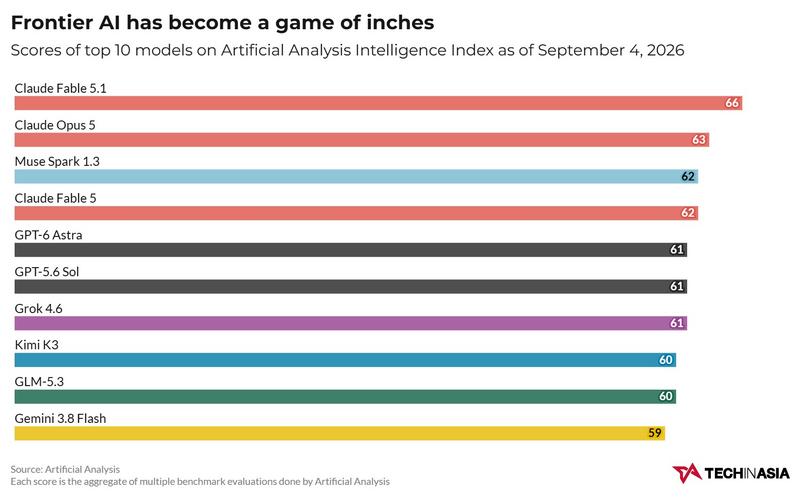
Three Big Tech models arrived last week: Google's Gemini 3.8 Flash, Meta's Muse Spark 1.3, and OpenAI's GPT-6 Astra. Each of them received different levels of attention.

AI benchmarking platform Artificial Analysis placed Muse Spark 1.3, which focuses on coding and long-running agentic work, among the frontier models. Its API also remained relatively cheap at US$1.25 per million input tokens and US$4.25 per million output tokens.

While Gemini 3.8 Flash also shows substantial improvements on coding and agentic work, it quickly faded from online conversations as Muse Spark 1.3 beat it on Artificial Analysis' leaderboard. Meta AI chief Alexandr Wang wasn't shy on taking the win by mocking Google on X.

Then came GPT-6 Astra. OpenAI calls it its most intelligent and aligned model yet, with major gains in computer use, professional work, and cybersecurity.

It's impressive enough that OpenAI president Greg Brockman ended a press briefing announcing the model's arrival by saying "Welcome to the AGI (artificial general intelligence) era."

Yet Artificial Analysis offered a less dramatic verdict by giving Astra a score of 61, the same as its predecessor and even behind Muse Spark 1.3. Some OpenAI supporters responded by questioning the evaluator. Meanwhile, another independent benchmark by Epoch AI ranks Astra first on its own capabilities index.

It's tempting to say that independent testing is worthless given these conflicting rankings. Still, each result depends on what is tested, how it's weighted, and how the model is configured.

Take Astra's results on ARC RC-AGI-3, a reasoning benchmark. Under the same test conditions as other models, it scored 62.7%. However, under OpenAI's own setup - which let the model carry more memory and context between questions - Astra scored 99.9%.

That's the problem with chasing a "best AI model" title. The score depends on who's doing the testing and how, and it's unlikely for most people to reproduce the exact same setup used in these benchmarks.

These scores also don't matter as much in practice because developers will keep testing models against their own work and routing jobs to whichever performs best for them.

For most consumers, they will simply use whatever model is already built into ChatGPT, WhatsApp, Google Search, or Workspace, and not whichever one topped a chart that week. AGI era or not, that's the model people will actually judge.

Glenn Kaonang, journalist


FOUNDER FOCUS

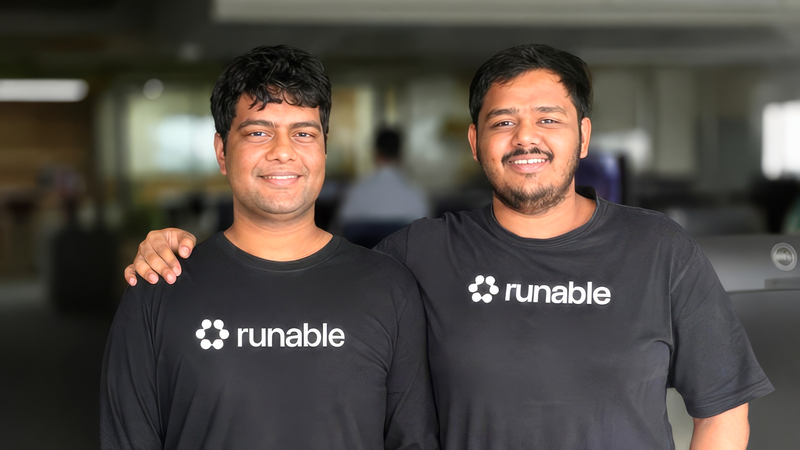
Bengaluru-based Runable raised a US$21 million series A round last month, co-led by Susquehanna Venture Capital and Nexus Venture Partners, with Together Fund and Array VC as returning investors.

Founded in 2025, the startup began by selling developers the plumbing for large-scale web scraping. It pivoted after watching users ask its browser agent for slide decks and websites instead.

Now, it's comparable to platforms like Lovable or Emergent. However, co-founder and CEO Umesh Kumar wants Runable to be closer to an operating system for small businesses, one that builds the site and then goes out and finds the customers.

This interview has been edited for length and clarity.
You are catering to small businesses, and I get the sense you are somewhat similar to Emergent. Is what you do kind of like vibe coding?

We don't call ourselves vibe coding. Our goal is simple. A small business can come to Runable and build, run, and grow their business. Emergent can only make landing pages. Runable is beyond landing pages.

If you look at companies in this space, their new user traffic spikes in the first month and then there is nothing. They made something on Emergent, or Bolt, or Lovable, but they don't know how to get that website in front of real customers.

If your customer is not earning anything, there is no way they can pay you anything.

What are the use cases exactly?

We had a yoga teacher in Italy who came to make a logo. Then she found out we make websites, so she asked for one. Then a slide deck with her class timings. Then a button that sends those timings over WhatsApp.

Then she came to support asking whether Runable could get her customers from a particular area. We built her a custom skill and ran the ads on our own agency accounts. Her use case was never getting a website live.

Closing that loop needs shared context about everything the business does. That is why we have a meeting recorder. This call is being recorded by Runable Live so the agent knows what is happening in my life. The dictation feature works the same way.

Customers use it because it writes to any app, but everything they say is captured on Runable. Say you have not connected your Slack. If you used Runable to type, I already know what you did there.

That is a lot of work for the AI to do. Relying on proprietary models gets expensive once you deploy agents. Are you using open source?

Most of the stack is ours. Our own harness, databases, analytics, infrastructure. We started as an infrastructure company, and Saksham and I are both technical.

We use open-source models for a lot of things and we are training our own. It is roughly 10x cheaper and almost equivalent to Opus, and we are deploying it for a few customers already.

Our priority is to pass those savings back to users rather than get gross margins positive.

What does traction look like and who is actually on the platform?

Around 1.7 million signups, with monthly active users beyond 100,000. Three categories retain: small and medium-sized businesses, consultants, and agencies building for their own clients. Geographically, it is the US and Brazil, and Japan is growing fast. Japan retains very well and it is a high ARPU (average revenue per user) market. Then the UK, Italy, France.

What's about India?

Runable is an expensive platform. We promise outcomes, not artifacts, and that is where we burn tokens. That is why India is not a good market as of now.

We saw the same thing in Brazil. Users came, tried things, and churned. We expect India to become a viable market within the next three or four months as inference costs fall and we further optimize the platform.

Can you share more details about your business model? Is it subscription or outcome-based

Subscriptions and top-ups. A US$20 plan gets you 25,000 credits and you buy more when you run out. With Grow (the company's new product for running customer ad campaigns), we are adding a card the agent can spend on - for ads or anything else.

If a task is too complex for AI, Runable can hire a real human and pay them off that card. That is live for a few customers only.

How do you plan to use the US$21 million that Runable has just raised?

Mostly into Grow. We are working with Facebook and TikTok so a customer can deploy ads without creating any account. We were seven people when we raised and 15 including interns when we closed. We want 25 to 30. The goal is US$40 million ARR (annual recurring revenue) in the next three months.


Catch up on past issues of the newsletter here. In the meantime, if you have any feedback or ideas, feel free to get in touch with Huong, our managing editor, at huong@techinasia.com.

ADVERTISE | SUBSCRIBE | HIRE | FIND JOBS

P.S. Don't miss out on the biggest tech news and analysis. Add newsletter@techinasia.com to your address book, contacts, or safe sender list. Or simply move us into your inbox.

Tech in Asia thanks our partners for supporting our newsletters. Sponsorship has no influence on editorial content.

Too many emails?
Switch to a different frequency or get new content through our preference center, or unsubscribe.

You can also remove yourself from all Tech in Asia emails over here.


Copyright © 2026 Tech in Asia, All rights reserved.
Tech in Asia (Podium Level 3), 1000 Toa Payoh North, News Centre, Singapore 318994