|
|
 | |
Welcome to Tech in Asia's Sunday newsletter, a weekly selection of premium stories from our newsroom. Subscribe to us and send story tips to editors@techinasia.com. Ensure our articles appear in your Google searches:  |
IN FOCUS |
Hello reader, I might be the last person to lecture anyone about taking risks. I often skip any activity that looks remotely dangerous, which means an absolute no to thrill rides at theme parks. But at 16, I went to the US alone without even knowing how to speak English properly. Risk-taking, I've learned, comes in many forms. Courage doesn't always look like jumping out of a plane or getting on a roller coaster. Sometimes, it's going somewhere you don't know and having no idea whether you'll be OK. Working in tech journalism allows me to speak with founders who take much bigger risks every day. They leave stable jobs, put their savings into ideas that may go nowhere, and build companies knowing that 90% of startups fail within five years. But founders aren't supposed to take on the uncertainty alone. They need investors willing to make bets on them.  That willingness is being stretched to the limit in Indonesia, as Jofie Yordan shows in this week's editor's pick. Indonesia's tech scene has had a rough few years: the collapse of eFishery as well as the high-profile prison sentences of Nadiem Makarim and other executives, you name it. Against that backdrop, the country's state-backed VCs have become more cautious, especially when it seems a bad investment can invite unwanted scrutiny. Some are finding their way toward safer ground, whether by investing outside Indonesia or shifting away from riskier tech bets. For each firm, that may be a rational decision. Collectively, though, it could leave a hole that may dampen Indonesia's startup ecosystem. Over the past decade, Indonesia gave us names like Gojek, Tokopedia, and Traveloka. The next generation of startups will be building for the AI era. They have to. But they'll need investors willing to see them when they're still invisible. Speaking of taking risks, we have a small one of our own. This will be the last Sunday newsletter in its current format. Starting next week, Sunday will take on a simpler form as we put more of our writing firepower behind our AI newsletters. Consider this our own little pivot. More on that soon. Thu Huong Le, managing editor |
EDITOR'S PICKFrom big tech to cakes: Indonesia's state VCs retreat to safety 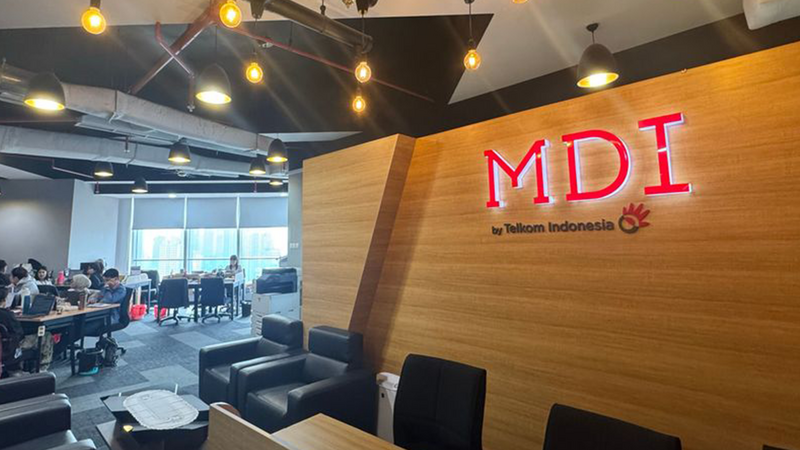 According to Jofie's reporting, state-owned VCs are backing away from tech bets while facing plenty of uncertainty themselves. President Prabowo Subianto has ordered Danantara, the country's sovereign wealth fund, to reduce the number of state-owned enterprises, a restructuring that could also affect these VCs. The collapse of local funding for tech startups means Indonesian founders have to look elsewhere for capital. Investment platform Ajab, for example, has just raised a huge round led by Japanese investor SBI Holdings. For Indonesian founders building in AI, going to the US could be a must. We should expect the bleeding of tech talent from Indonesia to continue and more Japanese investors coming in to provide a lifeline. |
SHORT CUTS1️⃣ I'm priced out of the iPhone Duo  Apple's latest iPhone Duo is priced at US$1,999, which is totally out of reach for someone like me in a market like Vietnam. It's funny, though, because I'm old enough to have had my first foldable phone sometime around 2006. The Duo feels like we're going back to the old days, with a much heftier price tag. Apple is betting that it can still make a difference even when it enters a market it didn't create. But it's less clear what else the Duo can offer us. Double the productivity? Double the fun? 2️⃣ Xpeng commissions humanoid robot lines in China 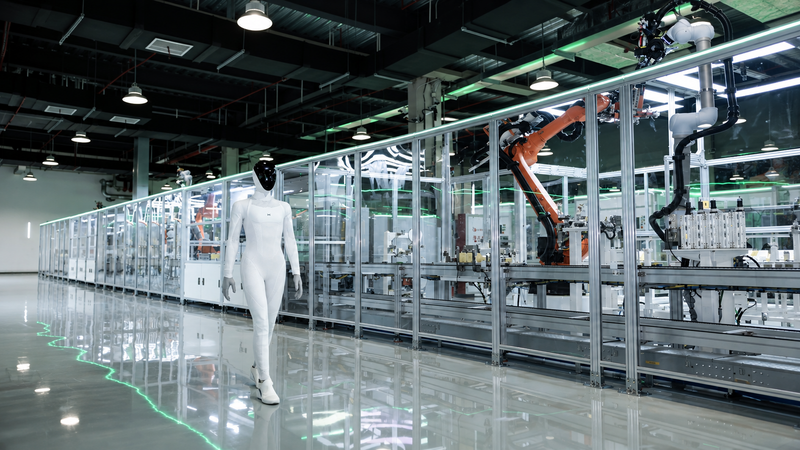 There's something eerie about seeing Xpeng's humanoid robots walking off its production lines. I know very well that this is a marketing event, but still. Xpeng, originally an EV marker, now says that more than 80% of the core processes on its humanoid robot production lines are automated, and its robots are set to enter mass production by the end of 2026. Meaning: Xpeng is using robots to make other robots. How weird is that? The less exciting news is that the Chinese government is reportedly tightening approval for humanoid robotics companies to go public after a volatile debut by Unitree, according to The Information. These humanoid robots might soon realize that walking off the production line is just the beginning of a much longer road to commercial success for their makers. |
WEEKEND DEEP DIVESam Altman gets the Hollywood treatment Artificial, the movie about the man who has become the human face of OpenAI and, arguably, the AI boom itself, is set to open on Christmas Day. Andrew Garfield plays Sam Altman. In 2010, Garfield was in The Social Network, where he played Facebook co-founder Eduardo Saverin opposite Jesse Eisenberg's Mark Zuckerberg. This time, Garfield gets to be the one in charge. The movie centers on one of the strangest episodes in recent tech history: Altman's sudden firing from OpenAI in 2023 and his return just days later. It was already dramatic enough in real life, complete with boardroom conflict, employee revolt, and Microsoft waiting in the wings. Of course, Hollywood can't stay out of this. So will Artificial do for OpenAI what The Social Network did for Facebook: give us a messier, more human story than the companies themselves would ever tell? My only thought: Please don't use any AI in this move. |
MEET THE PARTNERS POWERING TIA CONFERENCE 2026The brands shaping enterprise AI conversations 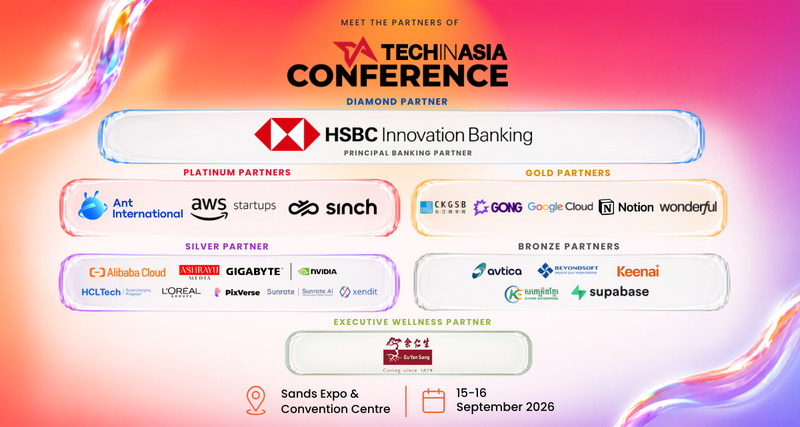 Tech in Asia Conference 2026 is bringing together founders, investors, enterprise leaders, and technology decision-makers across Asia. For two days this September, the event focuses on one of the biggest shifts reshaping business today: how AI moves from ambition into real-world execution. Backing those conversations is a growing lineup of organizations shaping how technology is built, funded, adopted, and scaled across the region. Joining us this September: - Diamond Partner: HSBC Innovation Banking
- Platinum Partners: Ant International, AWS, Sinch
- Gold Partners: CKGSB, Gong, Google Cloud, Notion, Wonderful AI
- Silver Partners: Alibaba, Ashrayu Media, Gigabyte Technology, HCLTech, L'Oréal, PixVerse, Sunrate, Xendit
- Bronze Partners: Avtica, Beyondsoft, Keenai, Khmer Enterprise, Supabase
- Executive Wellness Partner: Eu Yan Sang
With just days to go, the room is taking shape. This is your chance to be there alongside the partners, speakers, founders, investors, and senior leaders coming together to shape the next phase of enterprise AI in Asia. Tickets are selling fast. Secure yours now before they sell out. |
EVENTS HAPPENING You can also check out our curated list of trending tech events and Tech in Asia's signature events.  | Scaling AI across teams Move beyond individual AI use and explore what it takes to turn adoption into meaningful business impact. Join Notion for a curated session that brings together senior tech, transformation, operations, and IT leaders to exchange perspectives on scaling AI across teams, identifying high-friction workflows, and measuring impact beyond time saved. This event is open to Tech in Asia Conference 2026 General, Pro, and VIP pass holders, with attendance subject to approval. Register your interest now. | 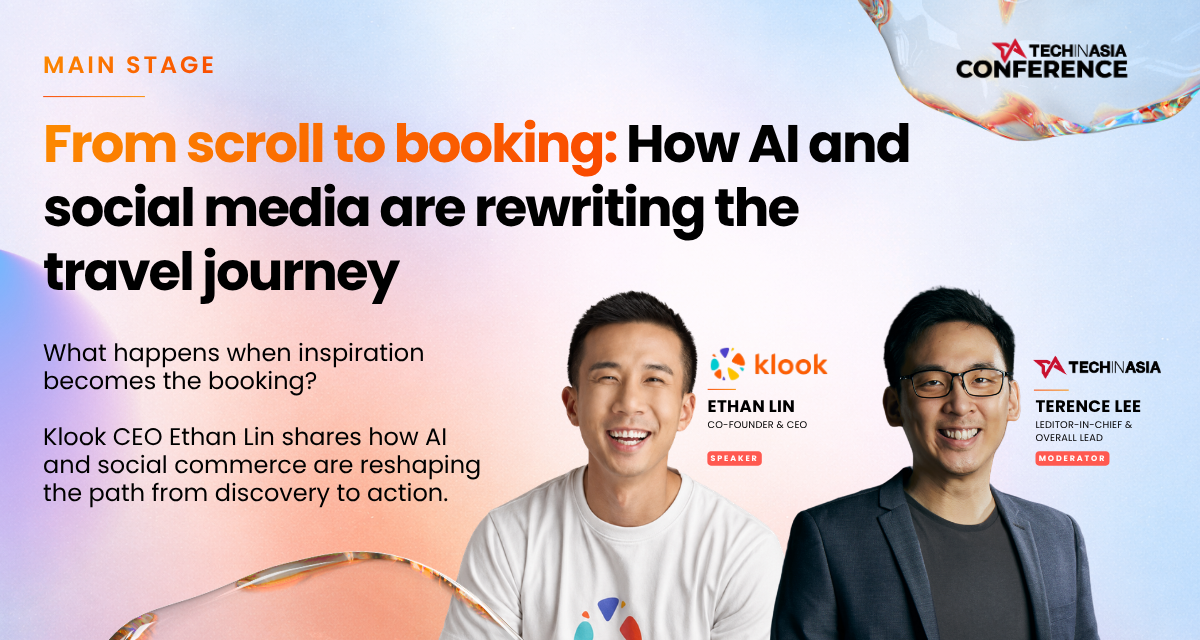 | How AI is rewriting the travel journey With only a few days to go until the Tech in Asia Conference, Klook co-founder and CEO Ethan Lin joins us to unpack how AI and social commerce are collapsing the distance between inspiration and action. With 30,000+ creators across 88 markets, Klook sits at the center of this shift, turning the content that people discover in their feeds into experiences they can book. Ethan will share what this means for the future of travel, from how tourists discover where to go to how AI is changing the path to purchase. Join us to see how AI and social commerce are reshaping the journey from discovery to booking. | 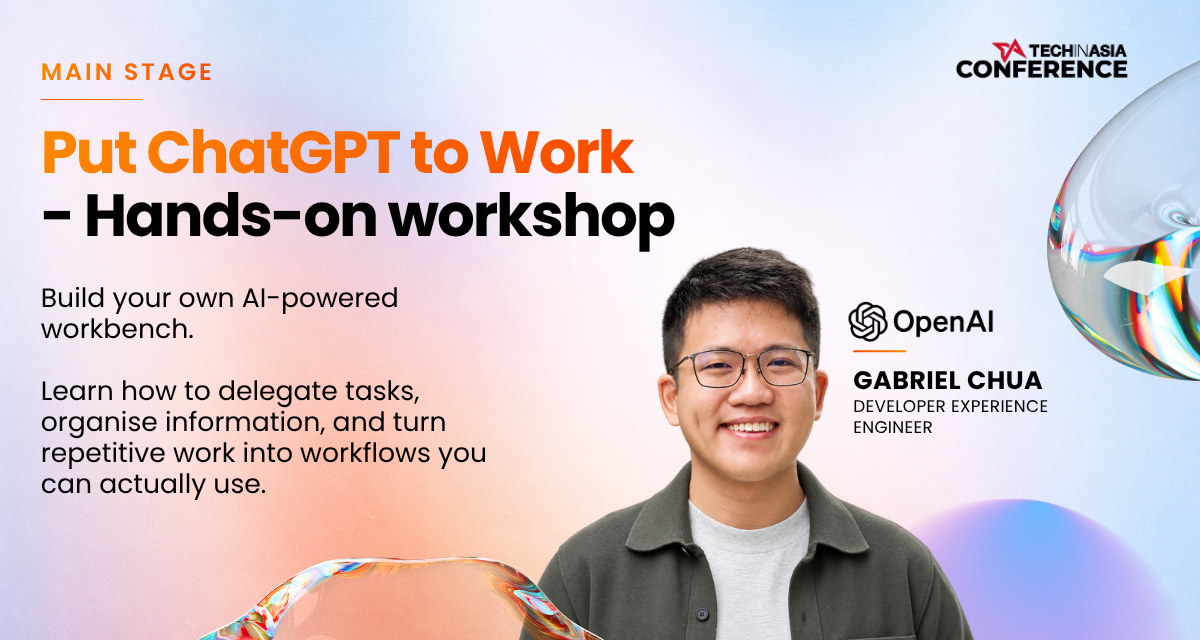 | A hands-on workshop with OpenAI What if ChatGPT could do more than answer your prompts? In this hands-on workshop, Gabriel Chua, developer experience engineer at OpenAI, will show you how to turn ChatGPT into an assistant that actually gets things done. Build a digital assistant, delegate tasks that keep moving while you're away, organize information across the tools you use, and turn repetitive admin into workflows you can reuse. You'll leave with practical workflows you can put to work immediately and one month of ChatGPT Plus for free. |
| |
|