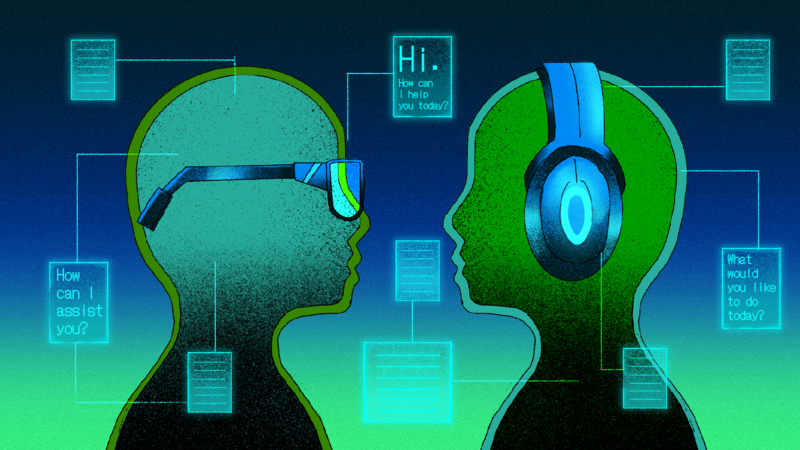
Hello reader, I recall being wowed by a keynote speaker at a conference a few months ago. The speaker was confident, her delivery was smooth, and she didn't gaze at the teleprompter once - or at least so I thought. Later, I found out that she was wearing a pair of smart glasses. On some pairs, users can display floating green text discreetly via a teleprompter feature, which allows them to maintain natural eye contact with an audience. That's just one emerging use case of smart glasses, which are trying to break into the mainstream through features like real-time translation, navigation, video, and other AI-assistive features through voice commands. Zoro Shao, Rokid's vice president and general manager of overseas business, tells me in my latest story that he believes these smart glasses can someday replace smartphones. I'm not fully convinced that will happen anytime soon, though. I myself have tried on various pairs of smart glasses from several brands. Their use cases are compelling, but since I don't wear prescription glasses daily, I am hesitant to invest in a pair I might not get much wear out of. This could explain why brands like lifestyle gaming firm Razer are prototyping AI-enabled devices in a different form factor: headphones. Do smart glasses or smart headsets have a higher chance of becoming the next breakout device after the smartwatch? Read on to find out. Melissa Goh, senior editor |