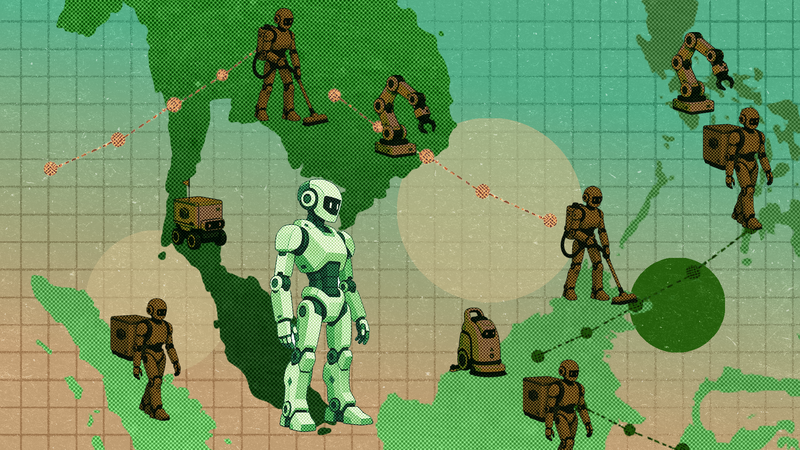
Hello reader, Science fiction has long imagined robots taking mundane tasks off our hands. We're getting there, just more slowly, and with much more human effort behind the scenes than fiction might suggest. Consider the robot vacuum cleaner, which has become a fixture in many homes and is something we now largely take for granted. Less visible is all the work required to make machines like this useful: collecting and processing training data, integrating hardware and software, mapping customer sites, and providing deployment and maintenance services. Before robots can appear intelligent in the real world, that groundwork has to happen, and this is what a growing cluster of Southeast Asian startups is now building. Today's top story maps nearly three dozen of them. Some are building the hardware themselves, while others focus on the data, software, and services essential for implementation. Together, they've raised nearly half a billion US dollars. The shape of this market looks little like the humanoid-robot race playing out in the US and China, as only five companies in Southeast Asia are chasing humanoid robots or general-purpose machines. Instead, most are going after narrower jobs like sorting warehouse stock, cleaning floors, or inspecting ship hulls. Robots that dance and do backflips draw a crowd, but customers pay for machines that can handle a job reliably without breaking down. That's the commercial bar the region's physical AI startups are trying to clear. Less flash, more work. Glenn Kaonang, journalist |