|
Hello Ketrin Desi,
Welcome (back) to On Brand, a revamped version of Tech in Asia’s newsletter for B2B marketers that we ran briefly two years ago.
From B2B marketing playbooks to candid campaign post-mortems, we’ll share valuable marketing lessons that’ll give you fresh ideas on how to navigate your own challenges.
In this edition, we’re taking a look at Tech in Asia Conference 2026. The event has been around for 15 years, but this year, we pivoted into enterprise AI, shining a brighter spotlight on emerging tech at scale.
This decision brought new challenges across sponsorships, registrations, client KPIs, production, and even day-of execution, but we learned several things about how brands can best take advantage of events to achieve their goals.
Let’s dive right in.
— Stefanie, editor (Studios) & Ummi, lifecycle marketer
UNDER THE MICROSCOPE: TIA CONFERENCE 2026
It’s been two months since the event concluded. Although it was our first Singapore edition in four years, we secured over 2,500 registrations, 1,575 unique attendees, and more than 100 speakers from tech giants such as DeepSeek, GoTo, and OpenAI. We also achieved a net promoter score of 66 – not bad at all.
When our team sat down for a debrief – or what we call a “post-mortem” – Terence Lee, Tech in Asia’s overall head, joked that it sounded like something had died. In a way, something did – all our preconceived notions of what the event would be like.
Here are three of our biggest insights from TIA Conference 2026:
1. The sponsor who didn’t make sense (until they did)
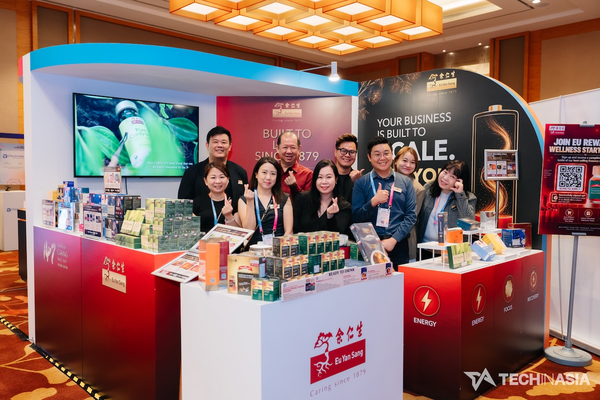
Seeing Eu Yan Sang – one of Singapore’s leading heritage traditional Chinese medicine brands – on an enterprise AI sponsor roster raised plenty of eyebrows.
On paper, it looked odd. On the floor, it stood out.
While non-endemic sponsors like Canon and Acura at Sundance are common, they rarely succeed by hard-selling. Instead, they integrate directly into the attendee experience, which is what Eu Yan Sang did for the event.
By midday, conference attendees and exhibitors were nursing screen glare, sore feet, and bad coffee crashes. Instead of pushing tech jargon, Eu Yan Sang met attendees at their point of need with fatigue-relief remedies, herbal refreshments, and wellness tonics.
Takeaways: In-person moments that solve real, physical friction build more authentic brand impression and affinity than another generic booth giving away pens or stickers.
You can also stand out by building a presence at events that sit outside of your main industry. If your target consumers are in the room having an experience that warrants the use of your product or service, addressing that need creates a memorable brand connection.
2. Activations don’t work in isolation
If Eu Yan Sang proved that you can get attention by standing out, the next challenge is what you do with that attention once you have it.
Many marketers fall into the trap of letting the booth do all the heavy lifting. We default to doing so because most of us are concerned with the top of the funnel such as impressions and engagements, which disregards the full journey of enterprise deals.
Jasmine from our events team shared that while an energetic crowd breaks the ice, senior decision-makers need quiet spaces to speak candidly.
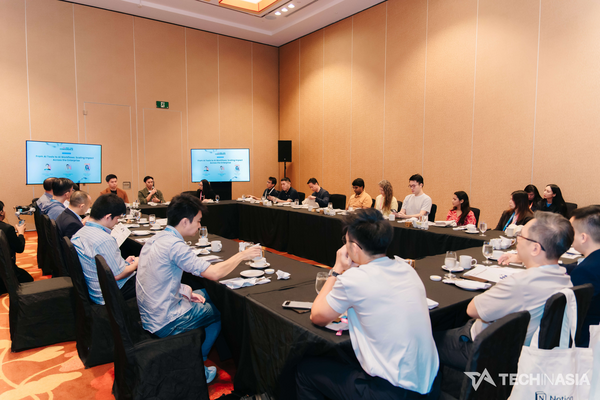
AI-powered productivity platform Notion employed that insight in the conference. Instead of relying solely on floor traffic, Notion paired its booth presence with an executive luncheon, filtering over 100 signups into an intimate room of 20 exact matches to its ideal customer profile.
The setup made for an intentional journey that had multiple touchpoints with potential clients.
Takeaways: Notion’s booth created brand gravity, but the curated satellite event drove the pipeline. Don’t let your booth become an isolated island – pair your floor presence with pre-event outbounds, private closed-door conversations, or post-event follow-ups to move the needle.
3. Satellite events: Our best-selling headache
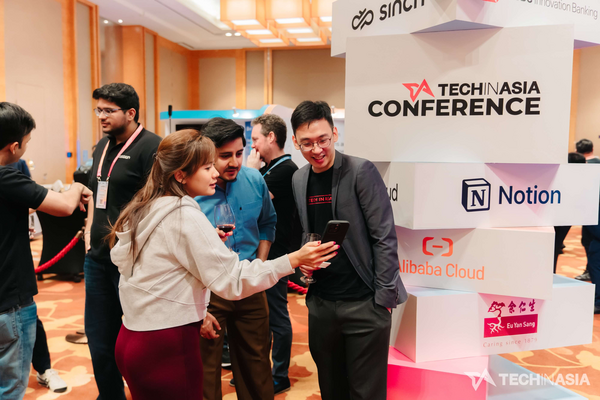
Curated breakfasts, luncheons, and roundtables were our best-selling packages, and they also served as our best foot through the door for sales conversion.
But successfully running eight of them alongside the main conference stretched everyone thin. With many new sponsors, we put in extra care to ensure that everyone was aligned on the goals and execution of the satellite events.
In a market facing increasingly strict budgets, every sponsor arrived with specific expectations such as distinct target personas, content goals, and custom formats. Here are the insights from our post-mortem that we arrived at:
- Reducing empty VIP chairs: Enforce a strict 48-hour RSVP deadline after invites go out and immediately release unclaimed spots to standby guests to curb high drop-off rates from complimentary invites.
- Eliminating logistics chaos: Pair standardized room setups with dedicated on-site staff to assist with issues about the venue and logistics, so sponsors can focus on their guests.
- Dedicated schedule buffers: Build intentional gaps between main-stage tracks and satellite sessions with attendee experience in mind so they never have to choose, while also ensuring roundtables and mixers stay full.
Takeaways: Event operations is brand protection. An effortless gathering requires obsessive behind-the-scenes groundwork, so it helps to partner with an experienced team to safeguard your brand.
WHAT’S NEXT
Running TIA Conference 2026 reminded us that our core purpose is building and serving the region’s tech and business community. As we gear up for 2027, we’re taking those lessons into everything we build in the future.
If you’re planning your calendar and want to connect with Southeast Asia’s tech ecosystem, here’s a look at what we have in store:
- Branded content: Position your narrative before verified decision-makers (47% CXO/VP-level) through native editorial and executive video profiles, which are amplified across the entire SPH Media network.
- Indonesia social-first: Reach Indonesia’s tech enthusiasts where they scroll daily with native video formats and sharp creator collaborations like Glitch in Asia.
- Upskill Fest (Jakarta, March 2027): Indonesia’s first AI learning festival for 2,500 professionals, built entirely around hands-on and practitioner-led workshops.
- The Upside (regional founder series): Asia’s first startup microreality series tracking 250 founders pitching across five cities, with a live finale to be held in Singapore.
- TIA Conference 2027 (Singapore, Q3 2027): Our flagship event returns, doubling down on curated executive roundtables and 180-day storytelling campaigns for 2,000 tech and business leaders.
If any of these spark an idea – or if you just want to compare notes on event strategy over a coffee – reach out to Terence or our senior business development representatives Miguel and Denise. We’d love to build something intentional with you.
|

